Bed in front of a window: when it works and how to plan it
Updated November 8, 2026
Yes, a bed can go in front of a window, and in many bedrooms the window wall is the only wall long enough for it. What decides whether it works is height, not width: if the window sill sits at or above the top of the headboard, the bed tucks in below the glass; if the sill is lower, the headboard covers part of the window. Below are two plans we checked, a queen under a wide window and a queen between two windows, plus the details that make it comfortable: curtains, drafts and heaters.
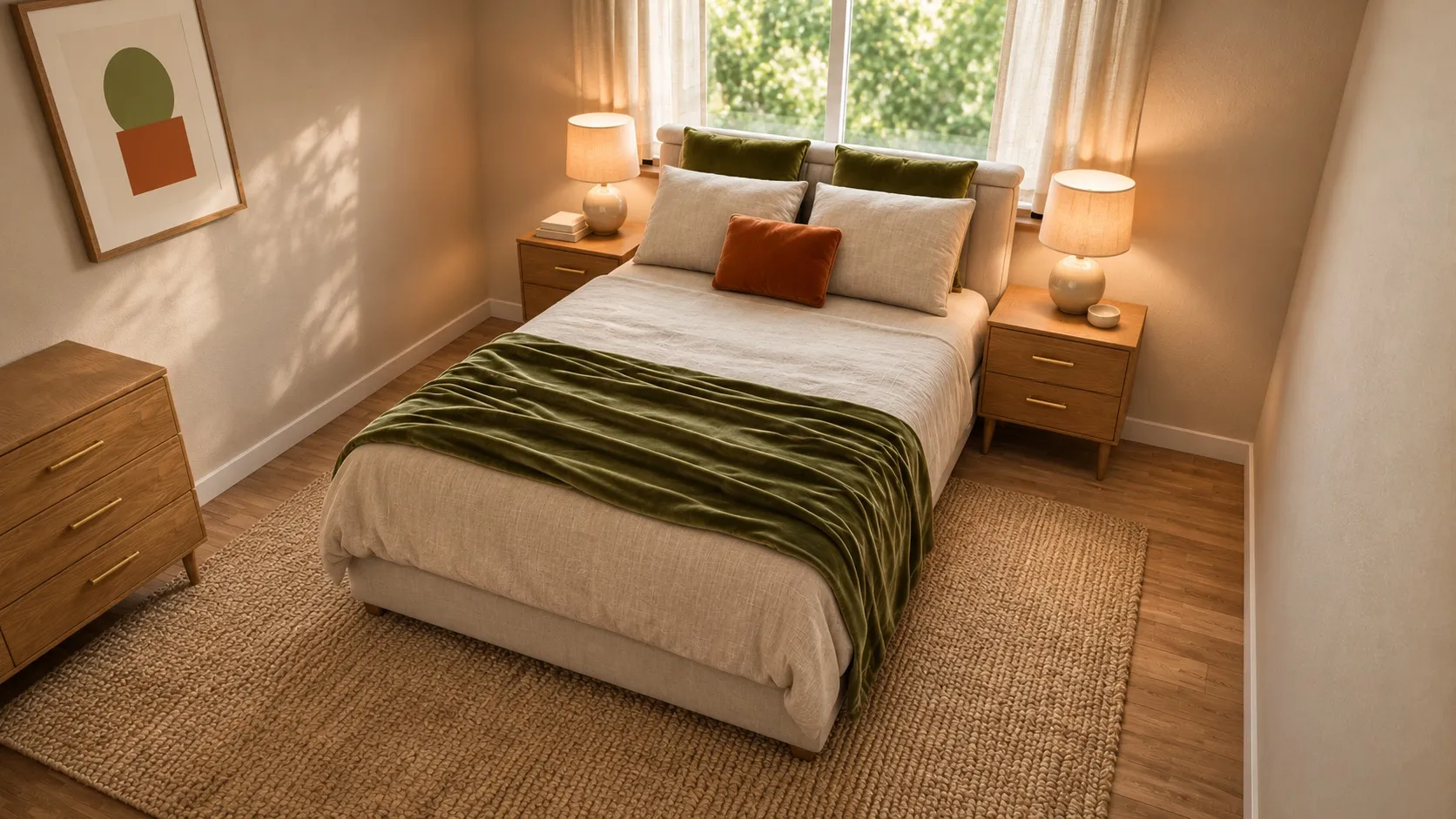 12 x 12 ft12x12 Bedroom with a Queen Bed in Front of the WindowLeft side 40" · Right side 40" · Foot 56"
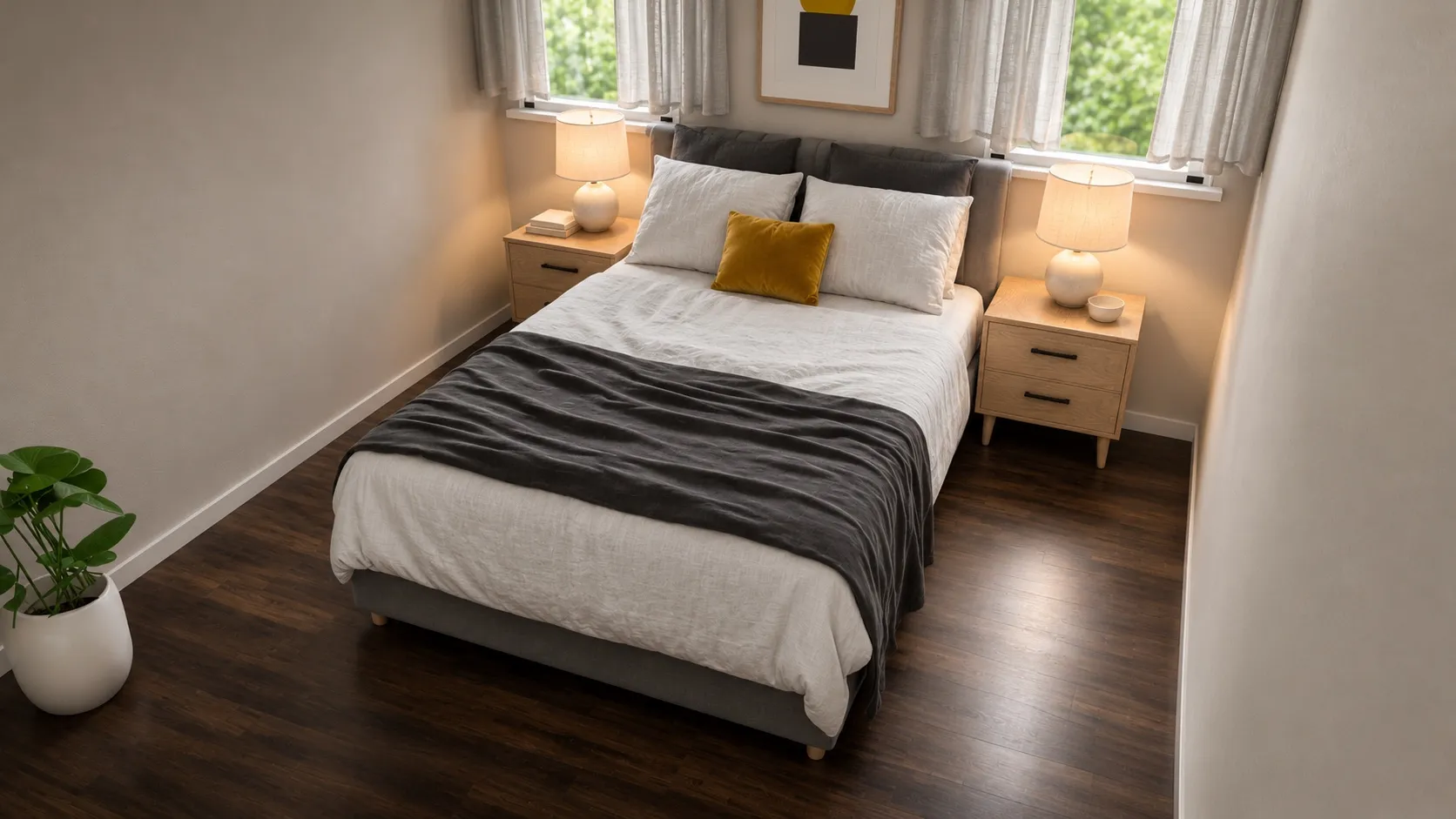 11 x 12 ft11x12 Bedroom with a Queen Bed Between Two WindowsLeft side 34" · Right side 34" · Foot 56"
Headboard height against sill height
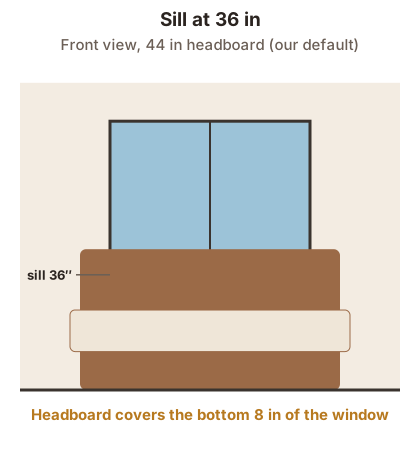
Measure two things before you decide: the height of your window sill above the floor, and the height of your headboard. Our planner uses a 44-inch headboard as its default; real headboards run from about 39 inches to well over 60.
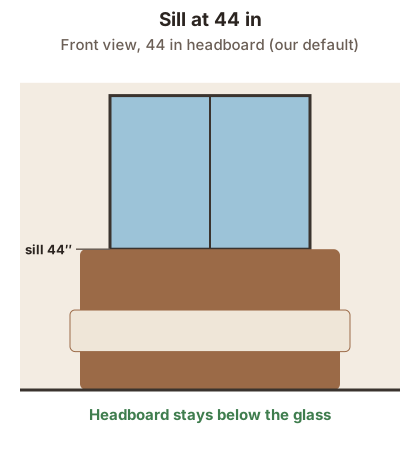
- Sill at or above the headboard: the classic “bed under the window” look. The window frames the bed, and you can still reach the latch.
- Sill a little below the headboard: it works, and it is common. The headboard hides the bottom few inches of glass. Choose blinds or curtains that clear the headboard when closed.
- Sill far below the headboard (a low or floor-length window): a tall headboard blocks the window. Use a low headboard, a platform bed with no headboard, or put the bed on another wall.
If you are choosing nightstands as well, their tops also have to clear the sill or sit beside the window. Our nightstand height guide covers matching them to the mattress.
Queen bed under a wide window: 12x12
12x12: queen bed centered under a wide, low window
A queen bed centered under a wide low window, with nightstands on both sides, an 8x10 rug and a dresser past the foot: the headboard covers the lower glass but the walkways stay 40 in.
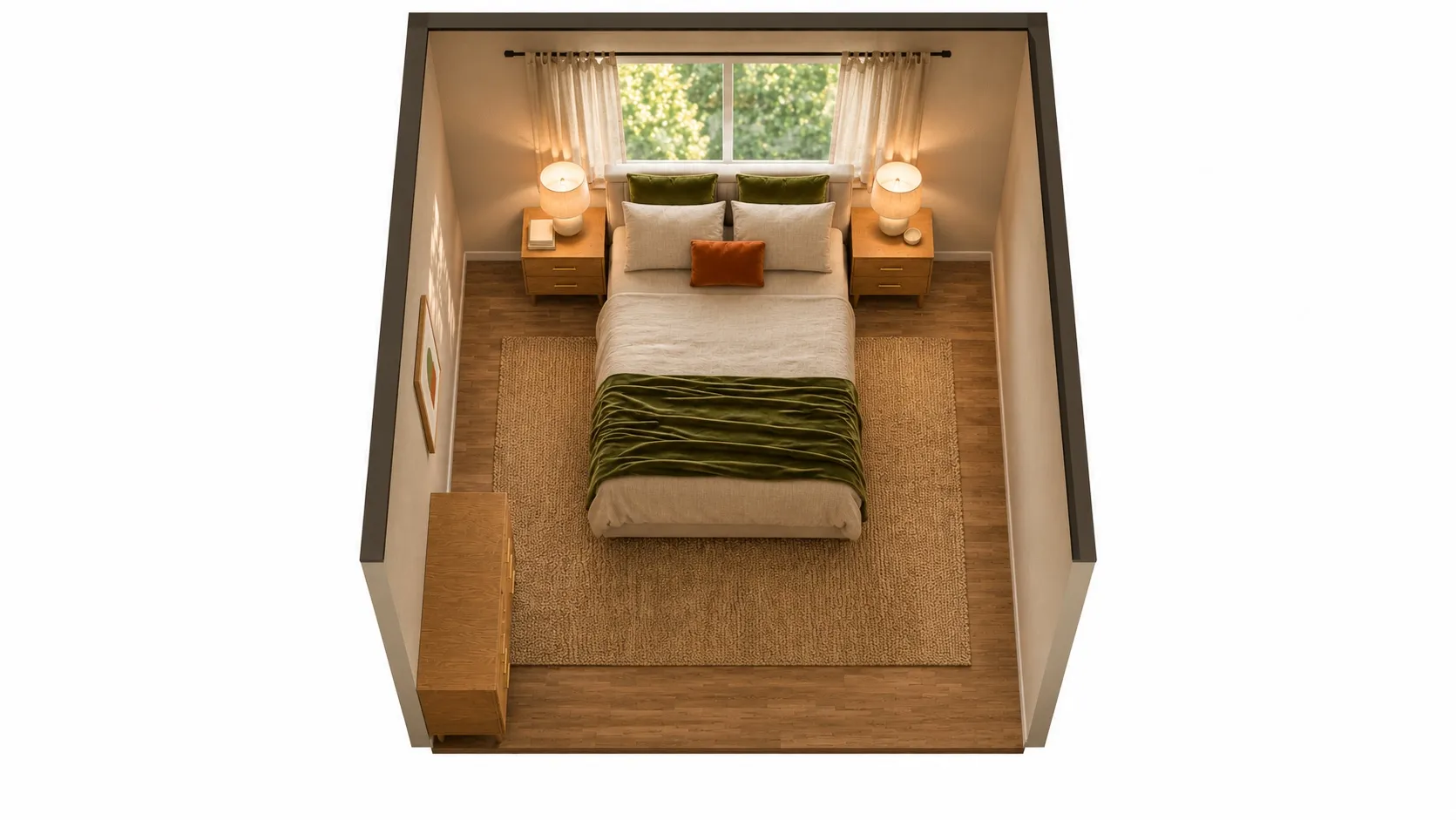
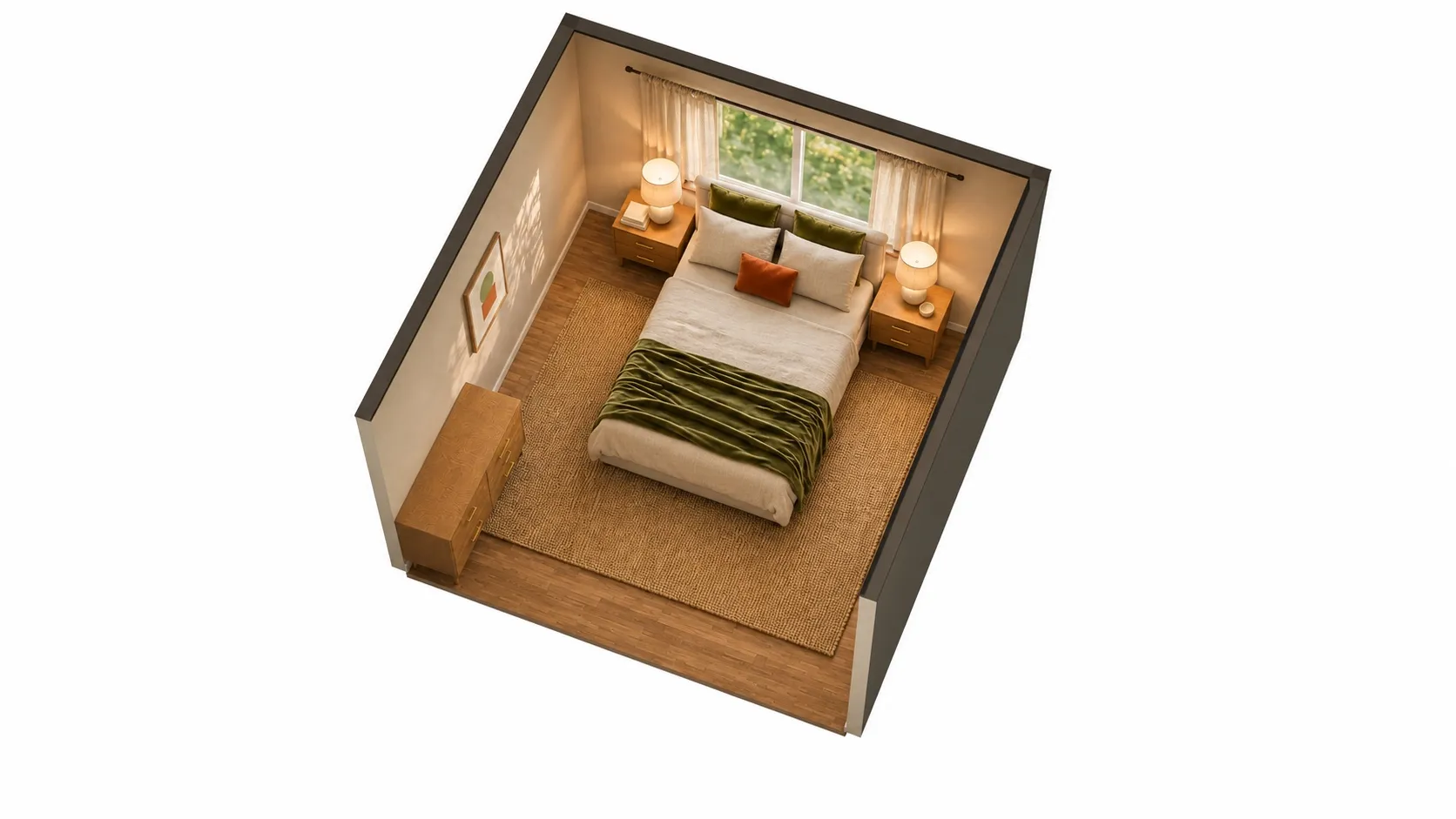
AI-polished images for a more realistic impression, built on an exact 3D model of this layout. Exact sizes are on the floor plan.
| Room | 12 x 12 ft (144 sq ft), 8' ceiling |
|---|---|
| Queen bed | 64" W x 88" D x 44" H |
| Nightstand | 22" W x 16" D x 24" H |
| Nightstand | 22" W x 16" D x 24" H |
| 6-drawer dresser | 52" W x 18" D x 33" H |
| 8' x 10' rug | 96" W x 120" D |
| Left side of the bed | 40 in | comfortable |
|---|---|---|
| Right side of the bed | 40 in | comfortable |
| Foot of the bed | 56 in | comfortable |
| 6-drawer dresser: drawer space | 126 in | comfortable |
Open this layout in the planner and try your own room size →
Here the window is wide and its sill sits lower than the headboard, so the headboard covers the lower part of the glass. That is a choice, not a mistake: with the door on the opposite wall, the window wall is the natural place for the bed, and the walkways stay comfortable. The bed keeps 40 in and 40 in on its sides and 56 in at the foot, and the dresser past the foot has 126 in to open its drawers.
Our planner flags this layout with a note, because a headboard under a window is a trade-off: a solid wall is quieter and less drafty. That note is information, not a failure.
Queen bed between two windows: 11x12
11x12: queen bed between two windows, a nightstand under each
A queen bed centered on the wall between two windows, each window above a nightstand, with 34 in on each side of the bed and 56 in at the foot.
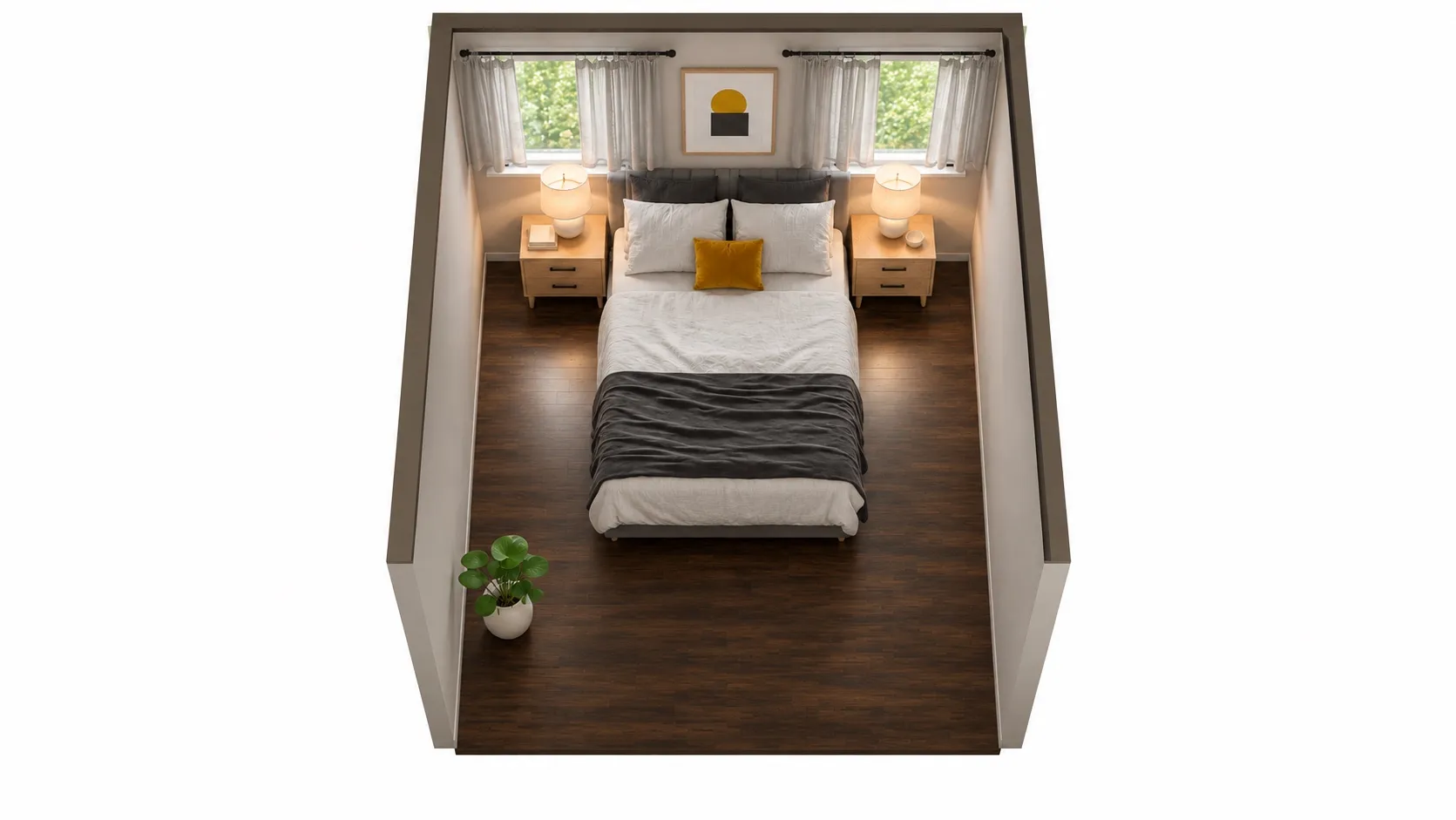
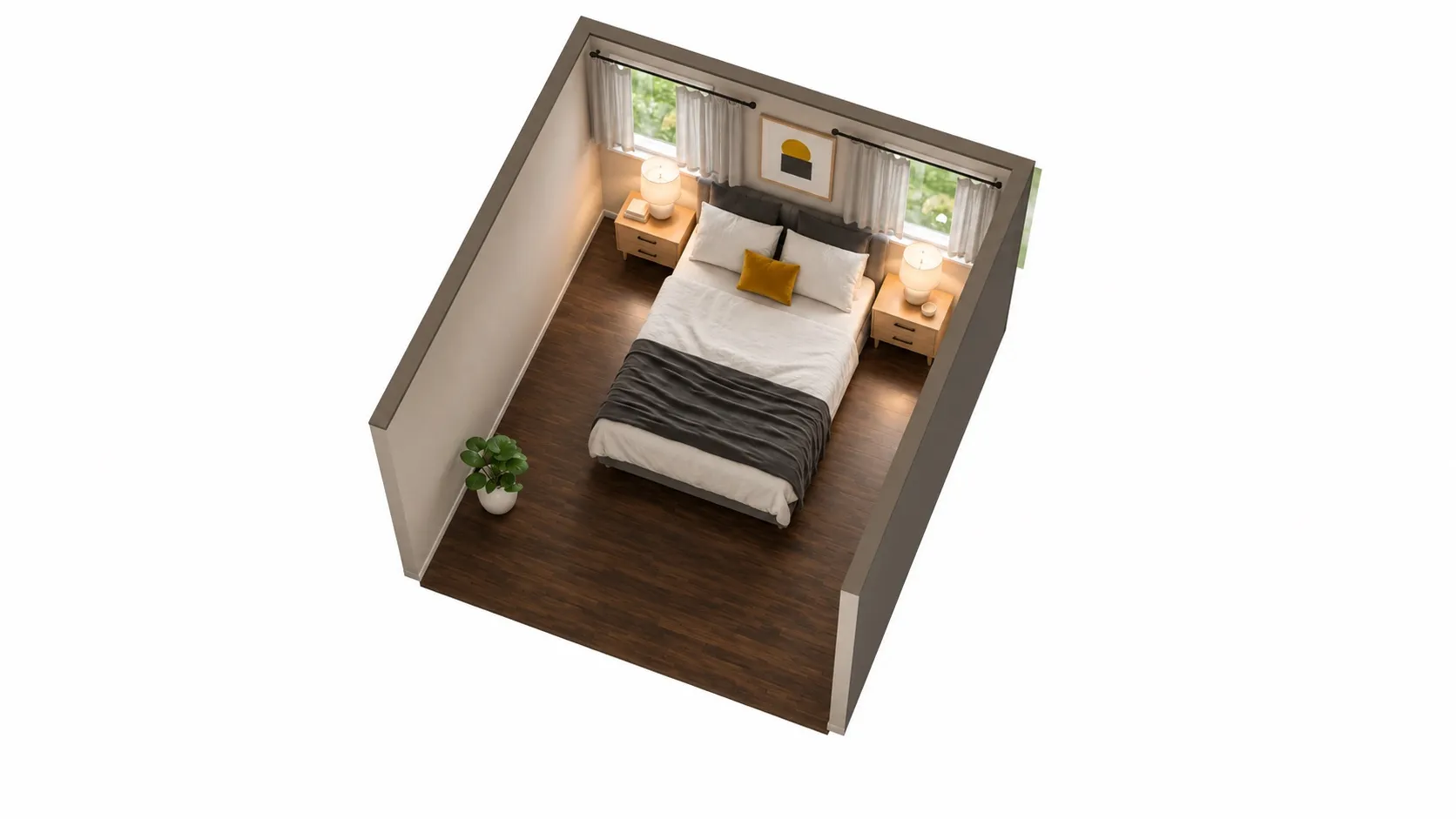
AI-polished images for a more realistic impression, built on an exact 3D model of this layout. Exact sizes are on the floor plan.
| Room | 11 x 12 ft (132 sq ft), 8' ceiling |
|---|---|
| Queen bed | 64" W x 88" D x 44" H |
| Nightstand | 22" W x 16" D x 24" H |
| Nightstand | 22" W x 16" D x 24" H |
| Left side of the bed | 34 in | comfortable |
|---|---|---|
| Right side of the bed | 34 in | comfortable |
| Foot of the bed | 56 in | comfortable |
Open this layout in the planner and try your own room size →
Two windows on the bed wall are often a gift: the bed goes on the solid stretch between them and each nightstand sits under a window. The bed keeps 34 in on each side and 56 in at the foot. Nightstands are low (24 inches in our catalog), so they stay below a typical sill, and a lamp on each lights the bed without facing the glass.
If the solid wall between your windows is narrower than the headboard, the bed overlaps the window trim. A headboard narrower than the gap, or no headboard with art centered above the bed, solves it.
Off-center window behind the bed
A window that is not centered on the wall is one of the most common layout headaches. Two ways to handle it:
- Center the bed on the wall, not the window. Walkways and nightstands come out even, which matters more day to day. Then make the window look intentional: hang the curtain rod wide across the whole wall, or use matching curtains on both sides of the bed.
- Center the bed on the window only if both walkways still reach about 24 inches. Our planner shows you each side as you slide the bed.
Heaters, vents and radiators under the window
In many older homes the heat source sits right under the window, exactly where the headboard wants to go. A bed in front of a baseboard heater, floor vent or radiator can block the heat and get uncomfortably warm. Check the heater’s manual for the clearance it needs. Common fixes are a bed with open legs instead of a closed platform base, pulling the bed a few inches off the wall, or a vent deflector. If none of that works, choose another wall.
A tall piece in front of a window
Only low furniture belongs in front of a window:
- Dresser against a window: fine if it is lower than the sill. A 6-drawer dresser in our catalog is 33 inches tall, so it clears any sill higher than that. A tall chest or a wardrobe in front of a window blocks light and the latch, and our planner marks it as a problem.
- Loft or bunk bed in front of a window: avoid it. The top bunk ends up next to the glass, and for kids, climbable furniture near windows and blind cords is a known risk. Put a bunk or loft bed on a solid wall; see bunk beds in a small room.
Mistakes to avoid
- Blocking the latch. You should be able to open the window from beside the bed without climbing on it.
- A tall headboard under a low sill in a room where the window is the emergency exit. Keep that window easy to open and reach; check your local code.
- Curtains that cannot close. A headboard pushed against the wall can trap curtains. Leave a couple of inches behind the headboard, or use blinds mounted inside the window frame.
- Ignoring drafts. A headboard against an old single-pane window can be cold at night. Heavier curtains or a padded headboard help.
Enter your room with the window where it really is, then try the bed on each wall. The planner shows the walkways and flags tall furniture in front of a window.
Questions people ask
Is it OK to put a bed in front of a window?
Yes. In many rooms the window wall is the only wall long enough for the bed. Check three things: whether the headboard is taller than the sill, whether you can still open the window and work the blinds, and whether there is a heater or vent under the window.
How high should a window be above a bed?
If the sill is at or above the top of your headboard, the bed sits fully below the glass. Our default headboard is 44 in tall, and sill heights vary from house to house, so measure yours. With a lower sill, choose a low headboard, or accept that the headboard covers the bottom of the glass.
Can a bed block an emergency escape window?
A bed in front of a window does not make it unusable, but do not put tall furniture there, and keep the window easy to open. The International Residential Code requires an emergency escape opening in sleeping rooms with a sill no higher than 44 in, and local codes differ. If the window is your room's escape route, check your local code.
Is it bad luck to have your bed under a window?
Some traditions, feng shui among them, advise against it. There is no size or safety rule against it beyond the practical points on this page: drafts, light, heat sources and being able to open the window.