Using a dresser (or desk) as a nightstand: height, width and layouts
Updated November 8, 2026
Yes, a dresser can work as a nightstand, and in a small bedroom it is often the smartest piece you can buy: one small dresser replaces a nightstand and a separate chest of drawers. Two things decide whether it works. The top should sit close to your mattress height, and the wall beside the headboard has to fit something about 10 inches wider than a nightstand. Below are two plans we checked, a 3-drawer dresser in a 10x10 and a desk as a nightstand in a 10x12, plus the height and width numbers to check your own furniture.
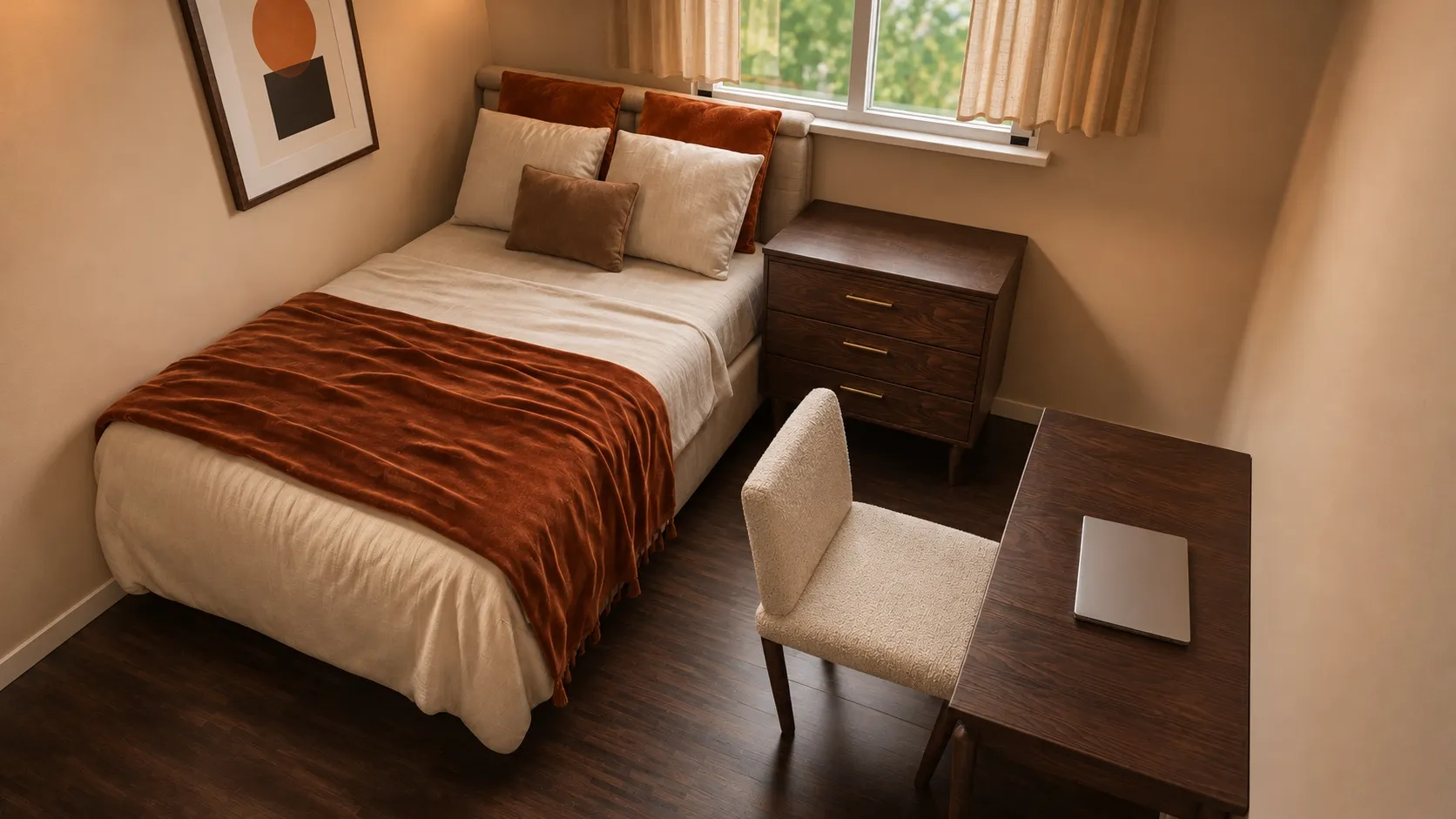 10 x 10 ft10x10 Bedroom with a Dresser as a NightstandRight side 42" · Foot 37"
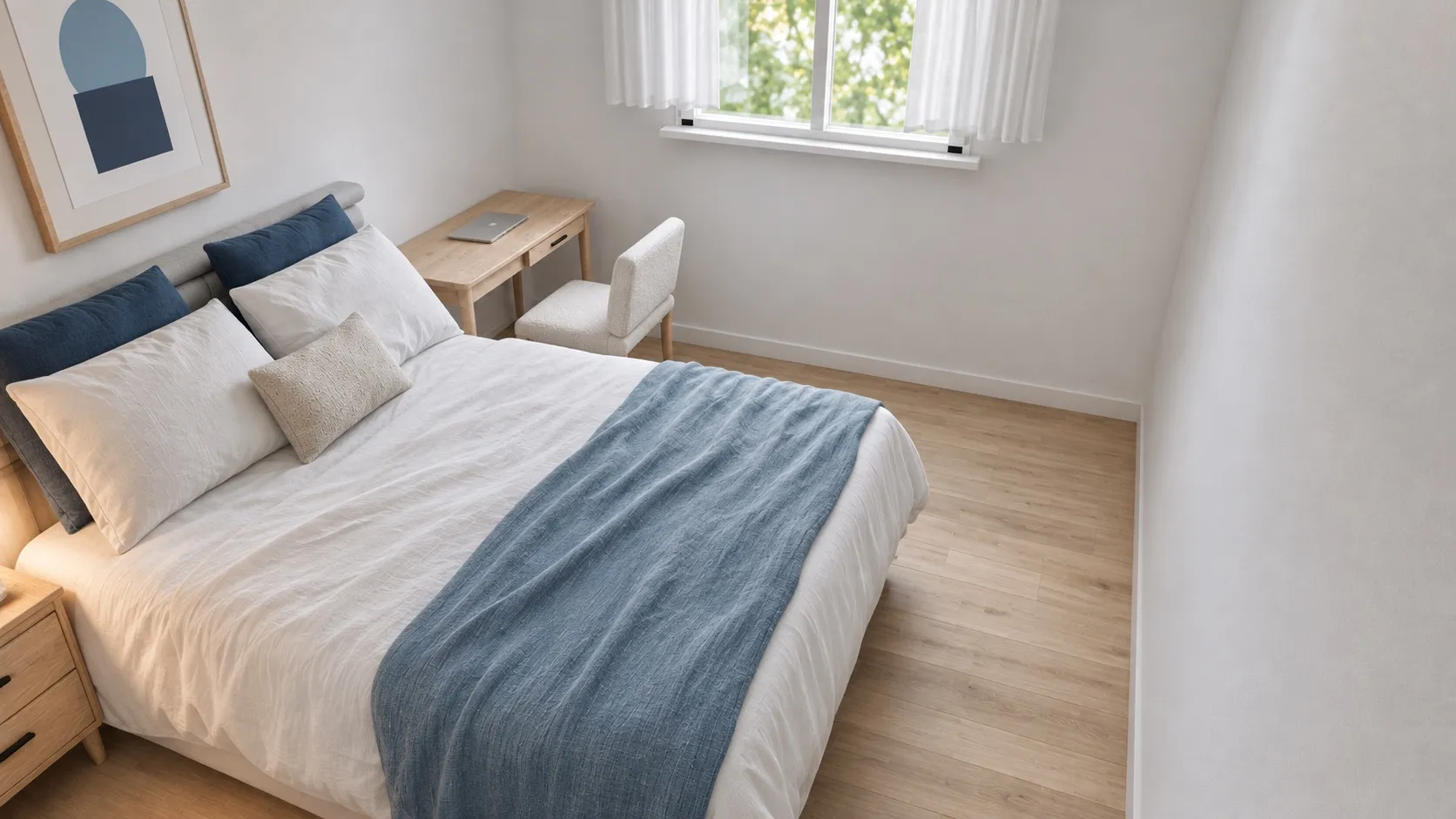 10 x 12 ft10x12 Bedroom with a Desk as a NightstandLeft side 31" · Right side 49" · Foot 32"
How tall should a dresser be as a nightstand?
The usual guideline for any bedside table is to keep its top within about 2 inches of the top of your mattress. Then your hand finds the lamp, the phone and the water glass without stretching up or reaching down. Here are the tops of the pieces in our catalog next to an example mattress:
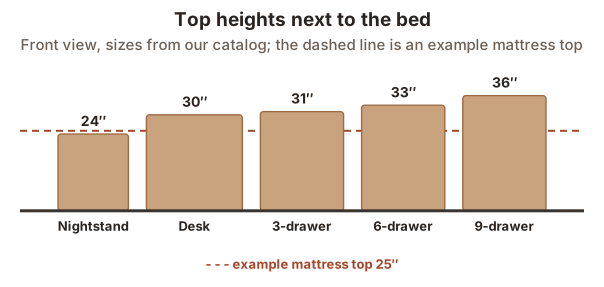
- A standard nightstand is about 24 inches tall in our catalog, which suits a typical bed.
- A small 3-drawer dresser is about 31 inches, and a desk about 30. That is 6 to 7 inches higher than a nightstand, which works best with a tall bed frame or a thick mattress.
- A 6-drawer or long dresser (33 to 36 inches) is too tall for most beds, and too wide for the space beside a headboard anyway.
So measure first: the height from the floor to the top of your mattress. If it is within a couple of inches of the dresser top, it will feel like a nightstand. If the dresser is much higher, you will be reaching up to a shelf. Our nightstand height calculator does the comparison for you.
How wide can it be?
Width is the other limit. A nightstand in our catalog is 22” wide and 16” deep; a small 3-drawer dresser is 32” x 19”. So a dresser as a nightstand needs about 10 more inches of wall beside the headboard and sits 3 inches further into the room.
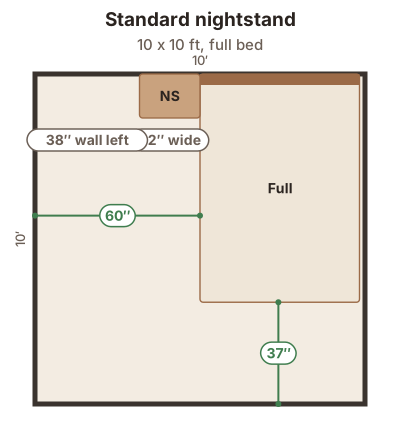
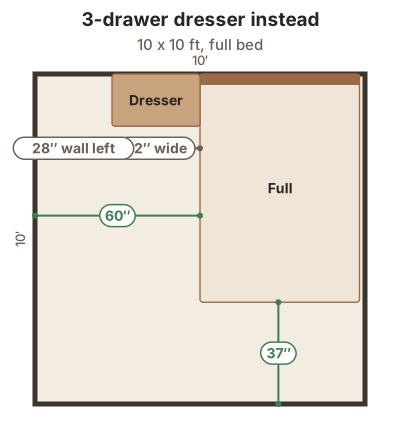
The good news in a corner layout: the walkway beside the bed stays the same, because the dresser lives in the headboard zone where you do not walk anyway. What shrinks is the wall left over for other furniture.
3-drawer dresser as a nightstand in a 10x10
10x10: full bed in the corner, 3-drawer dresser as the nightstand
A full bed in the corner with a 3-drawer dresser beside the headboard as its nightstand, and a desk on the opposite wall with 42 in of chair space.
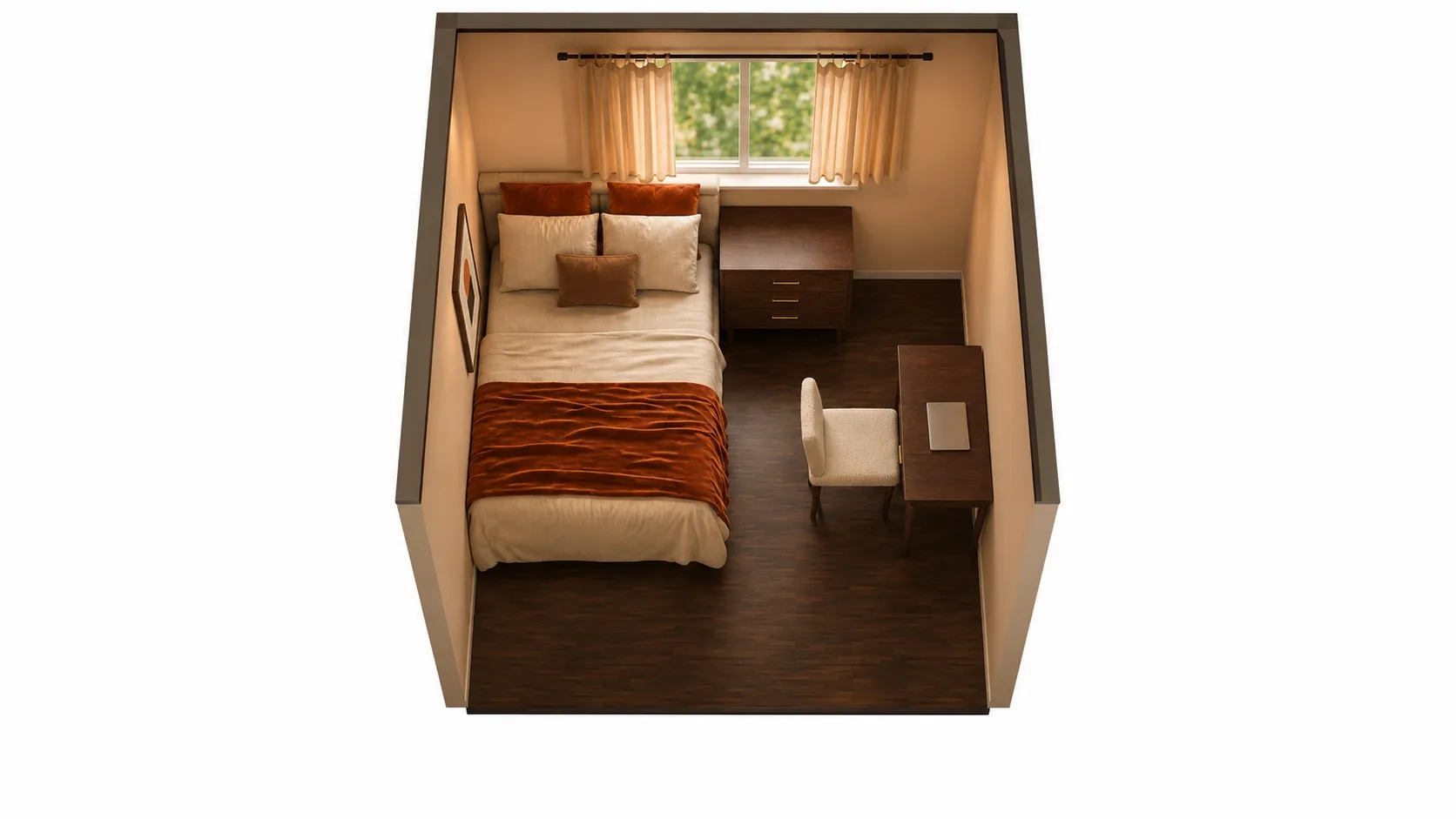
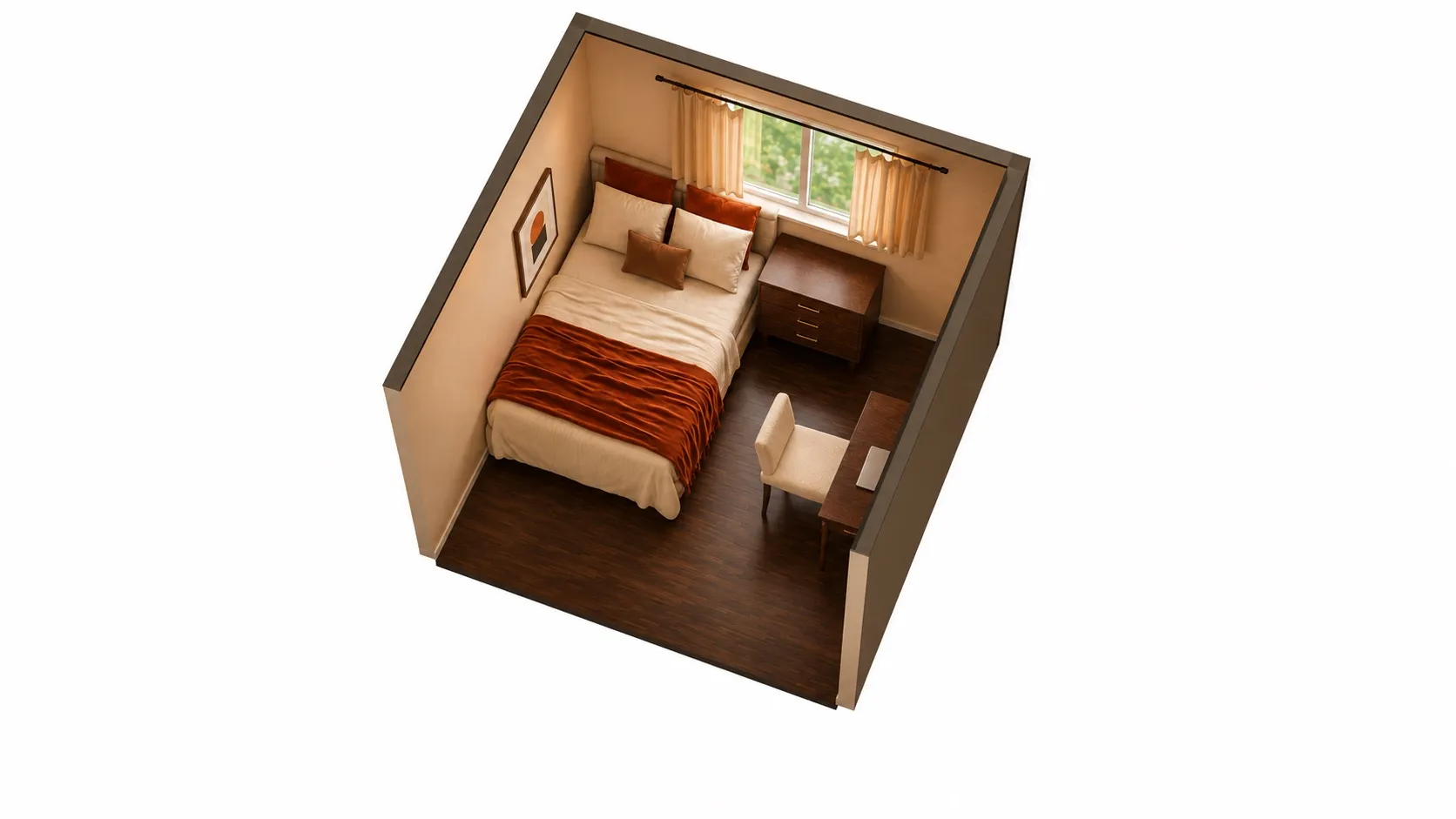
AI-polished images for a more realistic impression, built on an exact 3D model of this layout. Exact sizes are on the floor plan.
| Room | 10 x 10 ft (100 sq ft), 8' ceiling |
|---|---|
| Full bed | 58" W x 83" D x 44" H |
| 3-drawer dresser | 32" W x 19" D x 31" H |
| Desk | 42" W x 20" D x 30" H |
| Left side of the bed | Against the wall | against wall |
|---|---|---|
| Right side of the bed | 42 in | comfortable |
| Foot of the bed | 37 in | comfortable |
| 3-drawer dresser: drawer space | 101 in | comfortable |
| Desk: chair space | 42 in | comfortable |
One side is against the wall: fine for one sleeper, the second person climbs over.
Open this layout in the planner and try your own room size →
In this plan the full bed sits in the corner and a 3-drawer dresser takes the nightstand’s place on the open side. The bed keeps 42 in on its open side, the dresser has 101 in to open its drawers, and a desk on the opposite wall still gets 42 in of chair space. One piece of furniture does two jobs, and that frees the wall for the desk. More 10x10 plans are on the 10x10 bedroom layouts page.
Desk as a nightstand in a 10x12
10x12: desk by the window on one side of a queen bed, nightstand on the other
A desk beside the headboard doubles as one nightstand by the window, a regular nightstand takes the other side, and the queen bed keeps 31 in and 49 in beside it.
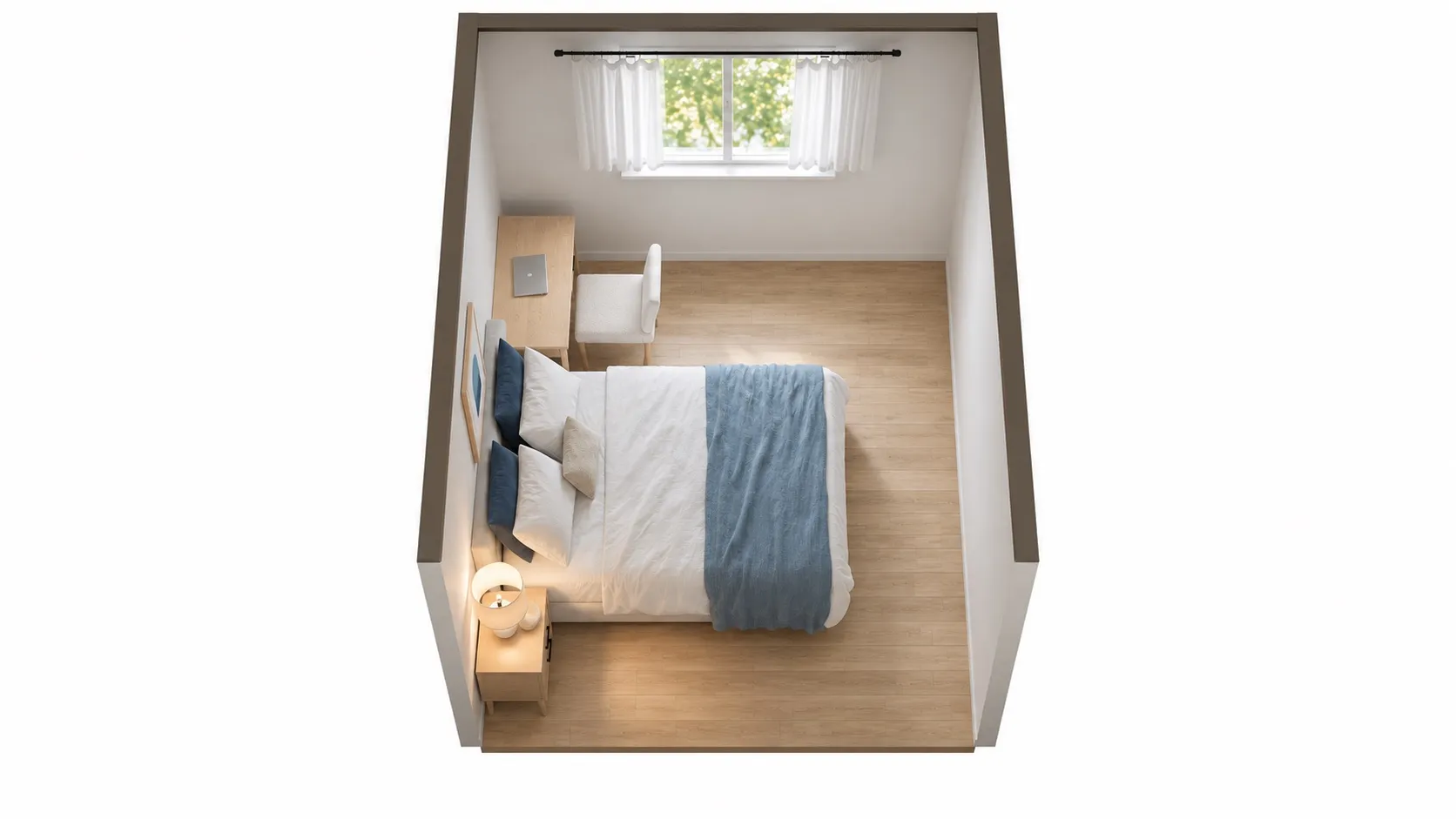
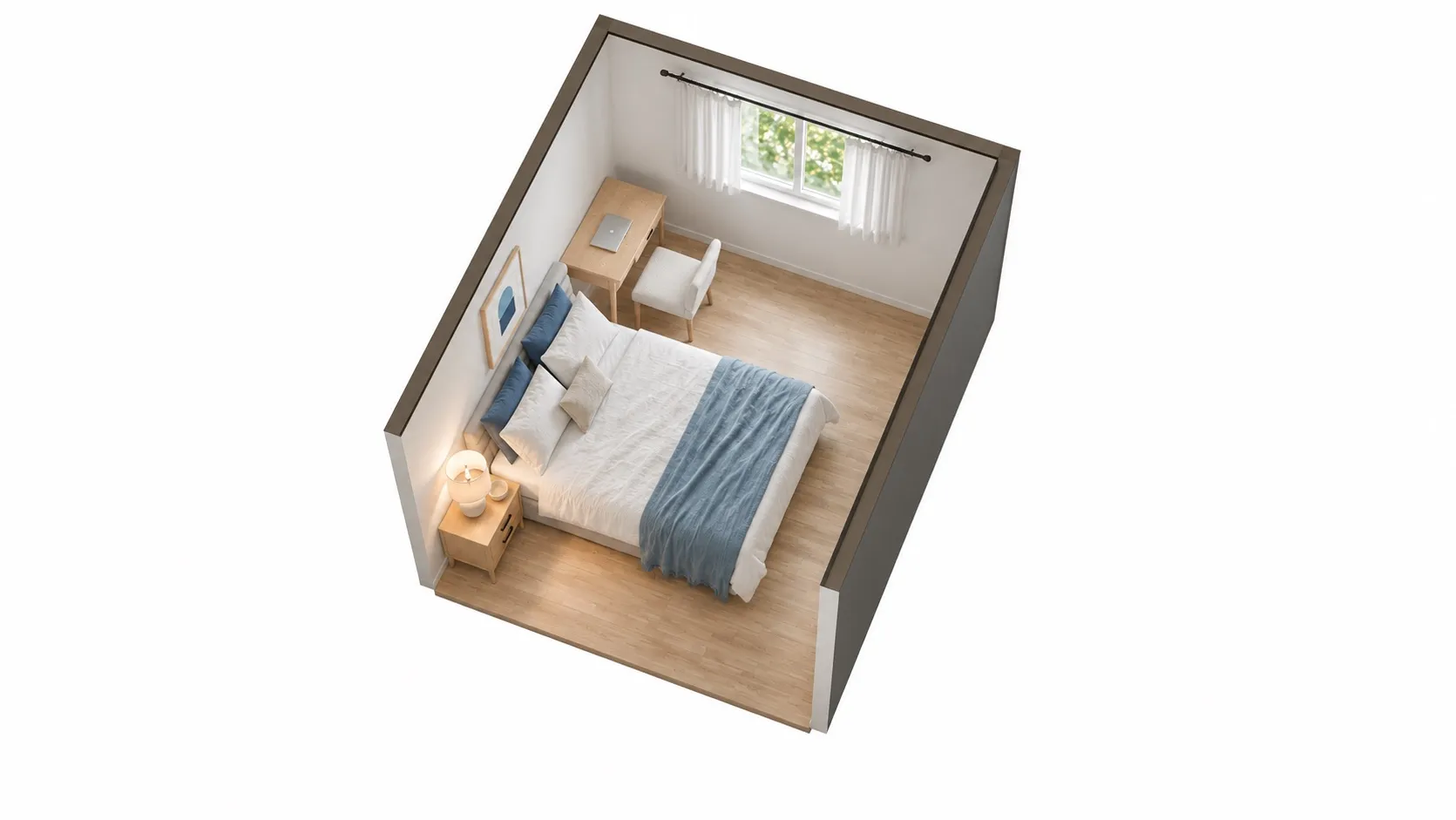
AI-polished images for a more realistic impression, built on an exact 3D model of this layout. Exact sizes are on the floor plan.
| Room | 10 x 12 ft (120 sq ft), 8' ceiling |
|---|---|
| Queen bed | 64" W x 88" D x 44" H |
| Desk | 42" W x 20" D x 30" H |
| Nightstand | 22" W x 16" D x 24" H |
| Left side of the bed | 31 in | comfortable |
|---|---|---|
| Right side of the bed | 49 in | comfortable |
| Foot of the bed | 32 in | comfortable |
| Desk: chair space | 100 in | comfortable |
Open this layout in the planner and try your own room size →
A desk beside the headboard is the same trick for a bedroom office. Here it stands by the window on one side of a queen bed, a regular nightstand takes the other side, and the bed keeps 31 in and 49 in on its sides. The desk chair has 100 in of floor. At night the desk is a big bedside surface; by day you work in daylight. For more desk layouts, see bedroom office ideas.
Keep the desk tidy enough to find your phone at night, and put a lamp on it that you can switch off from bed.
Nightstand vs dresser vs end table
| Piece | Size in our catalog | Top | Best beside the bed when |
|---|---|---|---|
| Nightstand | 22” x 16” | 24” | there is little wall |
| Small 3-drawer dresser | 32” x 19” | 31” | you need clothes storage too |
| Desk | 42” x 20” | 30” | you need a workspace |
A bedside table and a nightstand are the same thing. An end table is built for the living room, to sit beside a sofa arm; it can work beside a bed when its height matches your mattress, but it often has open shelves instead of a drawer.
When a dresser as a nightstand makes sense
- Small rooms with no wall for a dresser. One small dresser beside the bed replaces both pieces.
- Tall beds. If your mattress top is around 30 inches, standard nightstands are too low; a small dresser fits the height.
- One-sided layouts. With the bed in a corner there is only one bedside, and it can take a wider piece.
- Symmetry is optional. A dresser on one side and a slim nightstand or a wall shelf on the other is fine. The two sides do not have to match.
Mistakes to avoid
- A dresser much taller than the mattress. You will knock things off reaching up in the dark.
- Drawers that hit the bed. If the dresser is turned to face the bed, the drawers need about 30 inches of floor in front of them; beside a headboard they usually open into the walkway, which is fine.
- A wide piece in a narrow walkway. If the bed is centered and each side has only about 24 to 30 inches, a dresser that is 3 inches deeper and 10 inches wider than a nightstand can crowd the path to the bed. Check the side walkway in the planner.
- Not anchoring it. Dressers are clothing storage, and US tip-over rules assume they are fixed to the wall. Anchor it, especially in a kid’s room.
Start from the 10x10 plan, swap the dresser for a nightstand or a desk, and see what happens to the walkways and the free wall.
Questions people ask
Can you use a dresser as a nightstand?
Yes. A small 3-drawer dresser works well as a nightstand if its top is close to the height of your mattress top and the wall beside the headboard is wide enough. In a small room it often replaces both a nightstand and a separate dresser.
How tall should a dresser be to use as a nightstand?
A common guideline is to keep the top within about 2 in of the top of your mattress, so you can reach a glass or a phone without stretching. The small 3-drawer dresser in our catalog is 31 in tall, 7 in higher than a 24 in nightstand, so it suits taller beds and thick mattresses best.
Can a desk be used as a nightstand?
Yes. A desk beside the headboard is a lamp, phone and book surface at night and a workspace by day. Its top is about 30 in high, and it needs about 30 in of free floor in front of it for the chair, which can share the walkway beside the bed.
What is the difference between a nightstand and an end table?
A nightstand (also called a bedside table) sits beside the bed, is sized to the mattress height and usually has a drawer for small things. An end table sits beside a sofa or chair, is sized to the armrest and often has open shelves instead of drawers. Either can work beside a bed if the height matches.